

Last month, I wrote about something that has interested me for years:
Peace.
Not simply peace between nations, but what actually creates—or destroys—peace between human beings.
I began with a book I first read several years ago, Peace, They Say by Jay Nordlinger, which tells the fascinating, sometimes inspiring and sometimes deeply contradictory story of the Nobel Peace Prize.
Read my first article: Peace, They Say
The first Nobel Peace Prize, awarded in 1901, gave us the extraordinary story of Henry Dunant.
After witnessing the horrific aftermath of the Battle of Solferino, Dunant didn’t try to solve war.
He simply saw suffering in front of him and acted.
His work ultimately helped give birth to the International Red Cross and the Geneva Convention.
See suffering. Do something.
But the second Nobel Peace Prize takes us somewhere slightly different.
In 1902, it was awarded to Élie Ducommun and Charles Albert Gobat, two men who devoted much of their lives to the organised peace movement.
Their work raises an important idea:
It is better not only to deal with the consequences of conflict, but to build systems that help prevent conflict in the first place.
And that got me thinking.
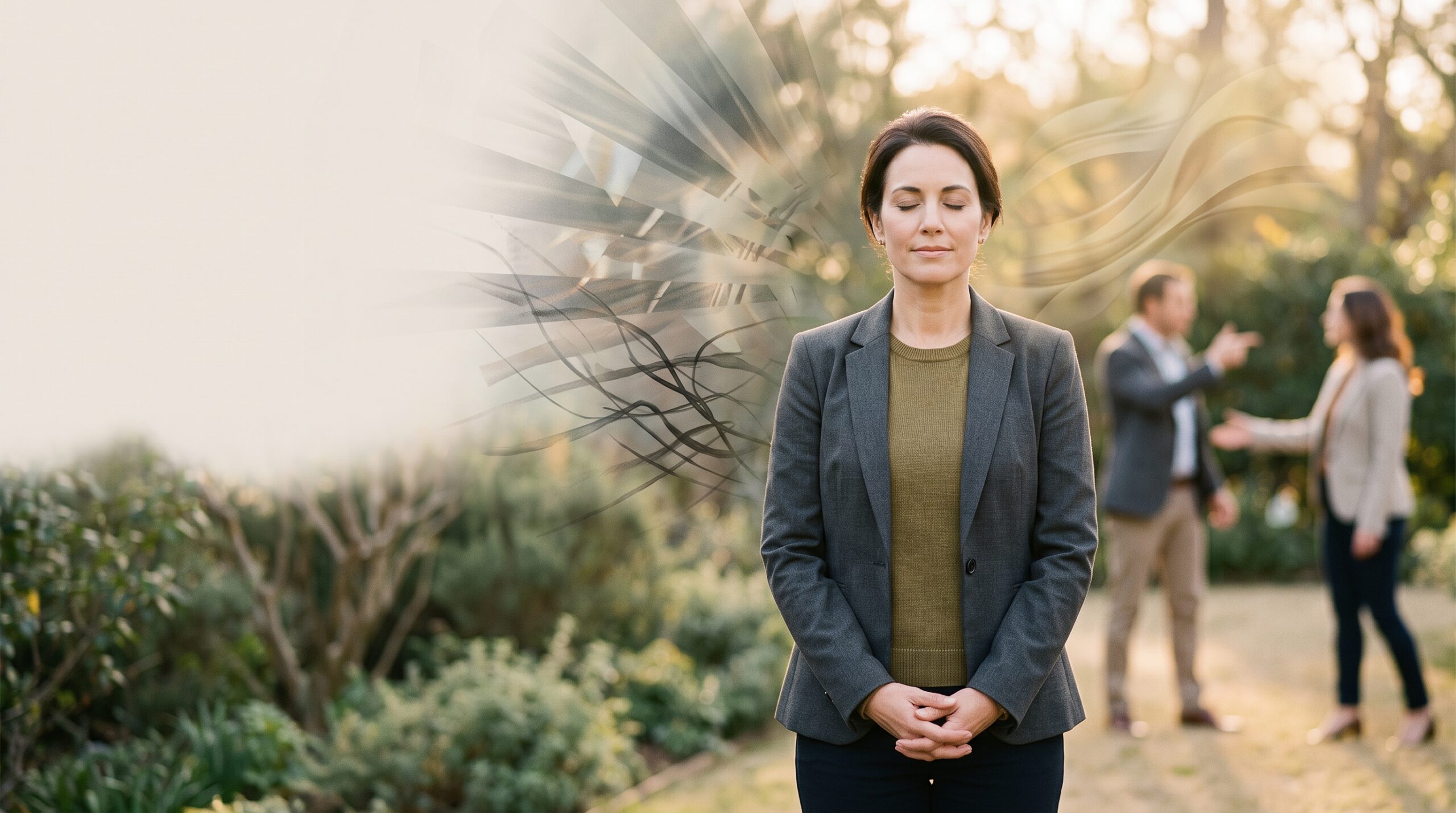
What if one of those systems is us?
Wars happen between nations.
Arguments happen between people.
But conflict also begins inside individual human beings.
Stress. Fear. Exhaustion. Anger. Resentment. Threat.
And when we’re physiologically and psychologically under-resourced, our capacity to pause, think clearly and choose our response can become smaller.
So perhaps creating a more peaceful world also means creating human beings who are more capable of peace.
That’s something I’ve become increasingly interested in.
My work on the Biological Foundations of Mental Health starts with a very simple premise:
The state of your brain is affected by the state of your body.
Sleep matters.
Movement matters.
Stable blood sugar matters.
Breathing matters.
Nutrition and the health of our biological systems matter.
My Biological Stability Stack therefore begins with five foundations: movement, sleep, blood sugar, breathing and biological diversity.
Not because these things will magically make everyone peaceful.
But because improving the biological foundations of mood, energy and mental clarity may give us a better platform from which to exercise patience, perspective and self-control.
And that gives us something we can actually do.
This month, in the lead-up to the UN’s International Day of Peace on 21 September, I’d like to suggest a slightly unusual contribution to world peace:
Work on your own capacity for peace.
Start with one thing.
Go for a walk every day.
Prioritise your sleep.
Eat in a way that gives you steadier energy.
Practise slow breathing when you feel yourself becoming reactive.
And perhaps, before firing off that angry email, making the cutting remark or escalating an argument, ask yourself:
“Am I about to make this situation better—or simply discharge what I’m feeling?”
You can start with my Biological Foundations guide here:
Biological Foundations of Mental Health —
https://drive.google.com/file/d/1_TEneyrGPhSKy7jGzPqfNwpJk0yQMX8O/view?usp=sharing
I’ve also recently been exploring another ingredient that I think matters enormously: hope.
Because peace isn’t only about reducing anger and conflict. We also need to believe that something better is possible—and that our actions can contribute to it.
On 21 September, millions of people will mark the International Day of Peace. International Day of Peace — United Nations
We can hope that governments make better decisions.
We can hope that wars end.
We can hope that other people become kinder.
But there is another place we have some influence:
ourselves.
Perhaps world peace doesn’t only begin around negotiating tables.
Perhaps a tiny part of it begins with millions of individual nervous systems becoming a little less reactive, a little more compassionate and a little more capable of choosing their response.
Peace between nations matters.
Peace between people matters.
And peace within people might help create both.
Be Well
Chris

