


How dysregulation at the individual level creates instability at the societal level — and what we can do about it
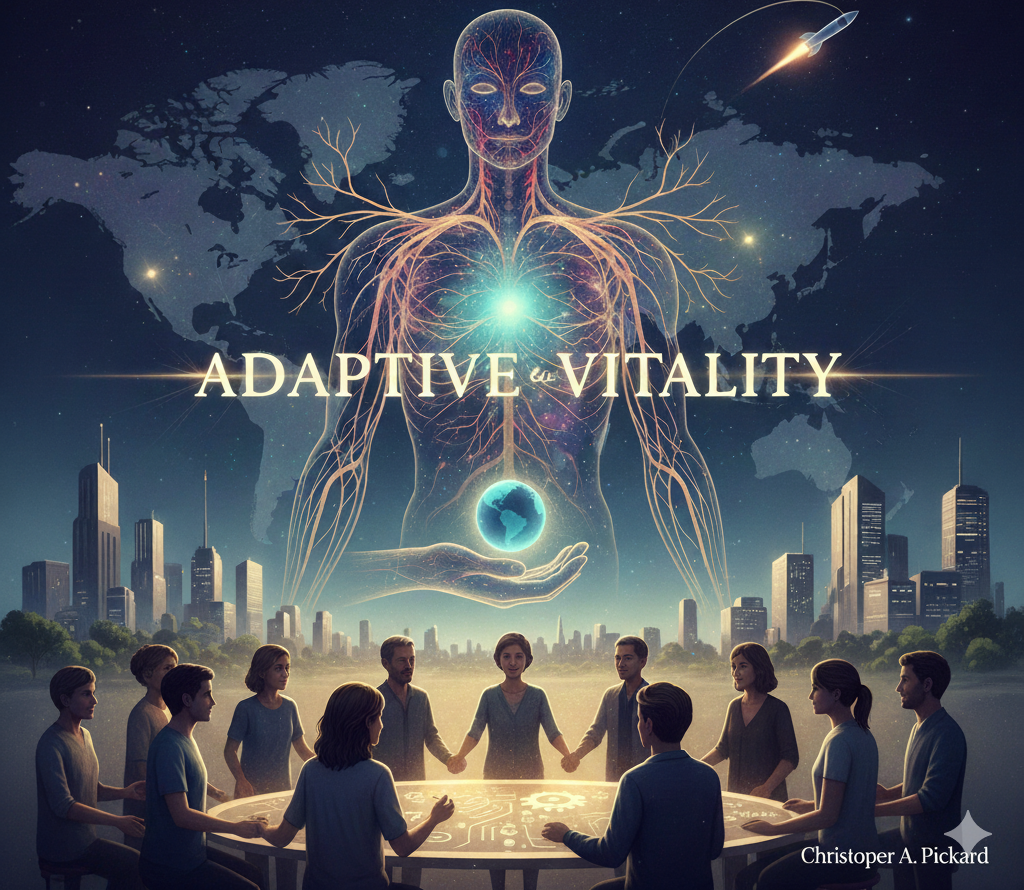
We think peace is a political problem.
A failure of diplomacy. A clash of ideologies. A breakdown between nations.
But I’ve spent 30 years working with bodies… and I’ve come to believe something different.
Beneath every conflict — personal or global — there’s something far more basic at work:
Dysregulation.
A nervous system that can’t settle.
A body that can’t recover.
A mind that can’t pause before reacting.
When you lack the capacity to regulate stress, emotion, and energy… compromise becomes impossible. Perspective narrows. Threat perception spikes. Anger rises faster than understanding.
This is as true in a household as it is in a government.
Or a boardroom.
Peace, it turns out, may be less about ideals — and more about physiology .
The Hidden Crisis We Don’t Name
Most people believe they’re doing enough.
They may eat reasonably well.
They may exercise (sometimes too much, often not enough).
They may manage work, family, responsibility as best they can.
And yet… quietly, predictably… something unfolds.
A little high blood pressure.
Borderline blood sugar.
Rising cholesterol.
Poor sleep.
Chronic tension.
Then medication.
Then another.
Then limitations start to accumulate.
What we call “ageing” is often something else entirely:
A gradual erosion of adaptive capacity.
We’re not failing because we lack information.
We’re failing because we misunderstand what health actually is .
Health Is Not the Absence of Disease
Modern healthcare is extraordinary at crisis management.
It can save lives, like mine.
Stabilise trauma.
Suppress symptoms.
But it’s poorly equipped to answer a deeper question:
What allows a human being to adapt — not just survive — across decades of stress, responsibility, and change?
The answer isn’t perfection.
It’s capacity .
This is where the concept of Adaptive Vitality becomes essential.
What Is Adaptive Vitality?
Adaptive Vitality is the capacity to meet stress, recover efficiently, and sustain energy, clarity, and meaning across physical, mental, and emotional domains.
It reframes health not as something you possess , but as something you demonstrate — moment by moment, season by season, year by year.
When Adaptive Vitality is high:
- Stress strengthens rather than depletes
- Recovery is efficient
- Emotions move without overwhelming
- Purpose remains accessible even under pressure
When Adaptive Vitality is low:
- Minor stressors feel overwhelming
- Inflammation accumulates
- Habits collapse under pressure
- Meaning erodes into survival mode
This isn’t a moral failing.
It’s a biological and behavioural reality .
When “Doing Everything Right” Isn’t Enough
I once worked with a senior executive — let’s call him James — who appeared to be doing everything right.
‘Clean’ diet.
Daily exercise.
A meditation app.
Yet he was snapping at his team, lying awake at 3am, living one difficult meeting away from emotional collapse.
His blood tests told a different story than his lifestyle checklist:
Chronic inflammation.
Unstable blood sugar.
Cortisol patterns locked in threat mode.
His nervous system was never off duty.
We didn’t start with more discipline.
We didn’t start with spirituality.
We didn’t start with a new mindset.
We started with biology and a simple new healing image.
We decreased nervous system stress.
Within six weeks — by removing unseen inflammatory burdens and giving his nervous system evidence that it was safe to recover — we stabilised the metabolic chaos.
And something shifted.
Not because James became a different person.
But because his body finally felt safe enough to pause before reacting .
That is Adaptive Vitality.
Dysregulation Comes First — Not Disease
Long before diagnosis, the body signals.
Poor sleep.
Irritability.
Brain fog.
Compulsive eating or over-exercising.
A sense of being “wired but tired.”
These are signs of system-wide dysregulation — across movement, nervous system, metabolism, emotions, and attention.
If ignored, dysregulation becomes pathology.
If addressed early, you can use it for growth .
The real tragedy isn’t that people suffer.
The real tragedy is that so much of it is avoidable — and we don’t teach people how to make this a reality.
You Can’t Meditate Past Broken Mitochondria
Here’s what I’ve learned after three decades in practice:
You can’t skip stages.
You can’t discipline your way through cellular dysfunction.
You can’t access meaning while your nervous system is in threat mode.
You can’t meditate past broken mitochondria.
I meditate myself. I love it. But it’s not a substitute for fixing the hardware.
Adaptive Vitality is built through sequence , not intensity.
This is the logic of The Integrated Ascent .
The Integrated Ascent: Building Adaptive Vitality in the Right Order
Stage 1: Biological Foundation
Restore cellular energy, metabolic flexibility, and inflammatory balance.
Fix sleep architecture.
Resolve gut dysfunction.
Stabilise blood sugar.
Rebalance stress hormones.
A nervous system cannot regulate on broken hardware.
There are both very low tech, and very high tech ways to help restore this.
Lets look at some high tech solutions as many are unaware of this.
The Space Race and Health
Here’s something from the Soviet space program.
They developed the Scenar device — biofeedback technology to keep astronauts healthy in space by communicating through the nervous system. Russian doctors use it instead of relying on drugs.
NASA research helped pioneer cold laser technologies — now used to support vascular health, nerve repair, and tissue healing
They also discovered that astronauts with chronic back pain came back from space pain-free… because their discs decompressed in zero gravity and healed.
Space tech taught us something profound:
The body can heal — if you give it the right conditions.
That’s Stage 1.
Stage 2: Behavioural Capacity
Install habits that hold under pressure.
Build emotional stamina.
Train consistency rather than motivation.
Use structure to reduce cognitive load and decision fatigue.
This is where discipline becomes sustainable rather than exhausting.
This is where you install the upgraded human ‘operating system’.
Stage 3: Psychological and Spiritual Depth
Cultivate attention, meaning, compassion, and inner authority.
Not as belief systems, but as consciously lived qualities .
Presence replaces reactivity.
Values guide action under stress.
When these foundations are addressed out of order , people struggle.
When addressed in sequence , change often feels — unexpectedly — effortless.
From Personal Health to Global Peace
As a child, I watched conflicts around the world on TV and wondered why adults couldn’t compromise.
As an adult, I began to notice something fascinating:
When people sleep better, eat better, breathe better, and regulate stress — anger softens. Perspective widens. Patience increases.
Even violence rates have been shown to fall with something as simple as nutritional intervention .
This isn’t naïve idealism.
It’s systems thinking .
A threat-driven body produces a threat-driven mind.
A threat-driven mind produces reactive behaviour.
Multiply that across populations — and we call it culture.
Peace does not begin in treaties.
It begins in individual regulated nervous systems.
There’s Enough. We Just Need to Share It.
This is where Buckminster Fuller comes in.
While Bezos, Musk, and Branson look to space to escape Earth’s problems…
Fuller looked at the math and said:
“We already have enough.”
Enough resources.
Enough food.
Enough energy.
The problem isn’t scarcity.
The problem is hoarding .
We fight over scraps because we believe there isn’t enough to go around.
But there is.
If we stop hoarding.
If we start cooperating.
If we regulate our own nervous systems enough to see clearly.
I love space exploration. I think it’s thrilling.
But we don’t need to mine asteroids to save humanity.
We need to fix the biology so people can make better decisions.
Flourishing Is a Trainable State
Adaptive Vitality isn’t about avoiding hardship.
It’s about becoming capable of meeting it .
It allows leaders to lead without burning out.
Parents to respond, rather than react.
Communities to disagree without dehumanising.
Societies to evolve, instead of tearing themselves apart.
Human flourishing isn’t a philosophical luxury.
It’s a biological prerequisite for peace .
A Different Definition of Progress
If we continue to define health as “not sick yet,” and success as productivity at any cost…
We’ll keep producing fragile humans in unstable systems.
But if we redefine health as adaptive capacity — and teach people how to build it, step by step —
We create something far more powerful than resilience.
We create Adaptive Vitality .
And from that, not just better bodies — but clearer minds, steadier emotions, and a genuine chance at a more peaceful world.
This Is What I Do
I’ve spent 30 years in clinical practice.
I’m a functional nutritionist, Heroic Coach, and originally a chiropractor.
I’ve trained in Unbeatable Mind with Mark Divine, and Heroic with Brian Johnson.
I’ve studied The Tools of Phil Stutz and Barry Michels.
I ran clinics in the UK for almost three decades.
And I’ve developed a framework called The Integrated Ascent — a three-stage sequential system for building Adaptive Vitality in high-performers over 40.
Because I believe this:
Self-health responsibility is the foundation of self-peace.
Self-peace is the foundation of global peace.
Dysregulated bodies create a dysregulated world.
This framework now underpins my clinical, coaching, and organisational work.
If this way of thinking resonates, reach out – 01707 662 704.
Space. Health. Peace.
Let’s make it real.
Be Well,
Christopher A. Pickard

